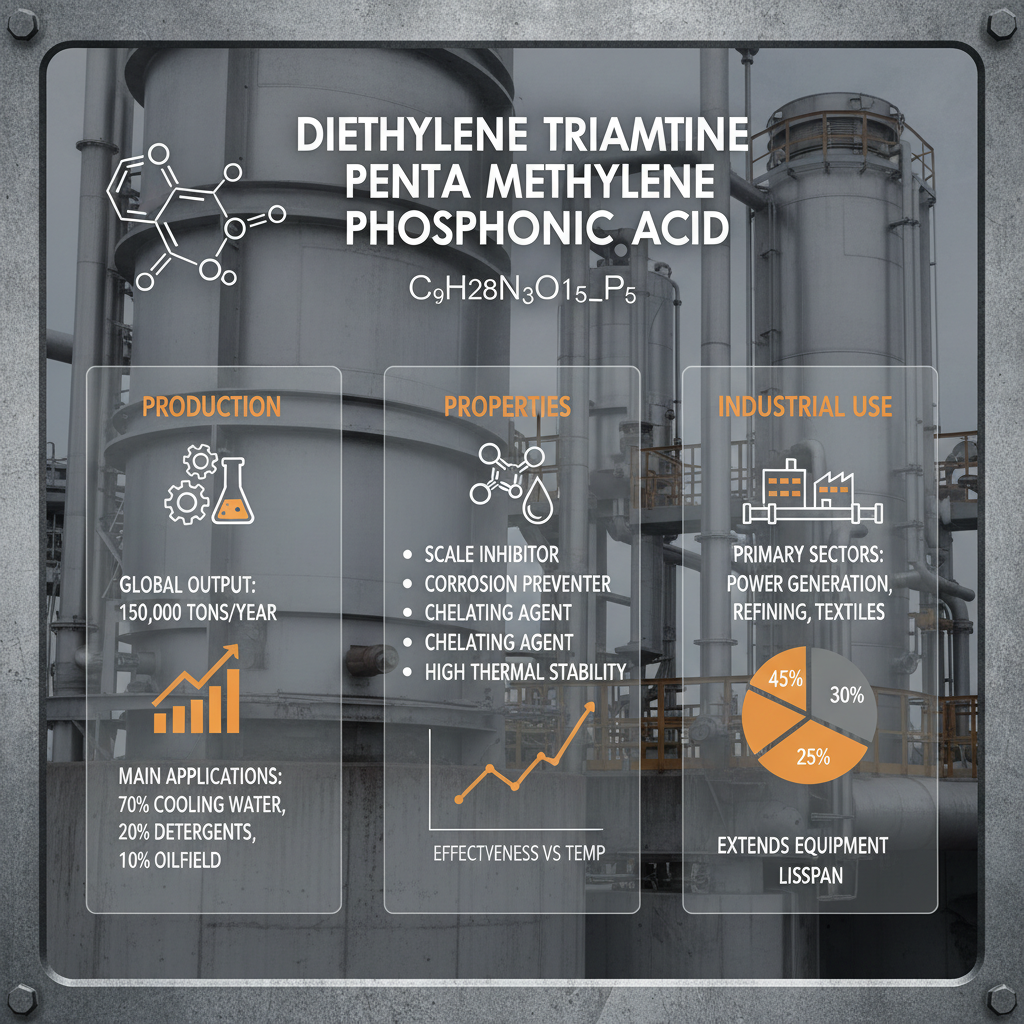
Diethylene triamine penta methylene phosphonic acid (DTMPA) is a highly effective chelating agent with a wide range of industrial applications. Its unique molecular structure allows it to form stable complexes with metal ions, making it invaluable in water treatment, detergents, oilfield operations, and various other chemical processes. Understanding its properties and applications is crucial for optimizing industrial efficiency and addressing environmental concerns related to metal contamination.
The global demand for effective chelating agents like DTMPA is steadily increasing, driven by stricter environmental regulations and a growing need for sustainable industrial practices. Industries are continually seeking solutions to mitigate scale formation, improve cleaning performance, and enhance the efficiency of metal-based processes. DTMPA addresses these needs effectively, offering a balance of performance and environmental compatibility. Its versatility makes it a key component in numerous formulations worldwide.
Diethylene triamine penta methylene phosphonic acid plays a critical role in facilitating advancements across multiple sectors. From preventing mineral build-up in industrial cooling systems to enhancing the effectiveness of cleaning products, DTMPA's influence is far-reaching. Its ability to sequester metal ions prevents interference in chemical reactions and ensures optimal performance in a variety of applications, making it an essential compound in modern industrial chemistry.
Introduction to Diethylene Triamine Penta Methylene Phosphonic Acid
Diethylene triamine penta methylene phosphonic acid (DTMPA) stands as a pivotal chemical compound in diverse industrial applications due to its exceptional chelating capabilities. This versatile molecule effectively binds metal ions, preventing scaling, enhancing cleaning processes, and improving overall system efficiency.
The significance of DTMPA extends beyond merely improving industrial processes; it’s a cornerstone in environmental protection efforts. Its ability to sequester harmful metal ions contributes to cleaner water systems and reduced pollution, addressing a critical global need for sustainable chemical solutions.
Global Relevance and Industry Context
The global market for chelating agents, including diethylene triamine penta methylene phosphonic acid, is experiencing substantial growth, estimated to reach [Insert Statistic] by [Year] (Source: [Industry Report]). This growth is driven by increasing demands in water treatment, detergent manufacturing, oil and gas exploration, and agricultural sectors.
Stringent environmental regulations regarding heavy metal discharge and water quality are fueling the demand for more effective and environmentally friendly chelating agents. DTMPA's biodegradability and lower toxicity compared to traditional chelating agents make it a preferred choice in many regions.
The United Nations Sustainable Development Goals, particularly those related to clean water and sanitation (SDG 6) and responsible consumption and production (SDG 12), further emphasize the importance of sustainable chemical solutions like DTMPA. Addressing these global challenges necessitates innovative chemistry and a commitment to environmentally conscious practices.
Defining Diethylene Triamine Penta Methylene Phosphonic Acid
Diethylene triamine penta methylene phosphonic acid (DTMPA) is an organophosphonic acid with the chemical formula C9H28N2O10P5. It is a white, crystalline solid that is highly soluble in water. Its structure features a central amine group with five phosphonate groups attached, giving it excellent chelating properties.
DTMPA’s connection to modern industry and humanitarian needs lies in its ability to control metal ions. In industrial settings, it prevents scale formation and corrosion. In humanitarian contexts, it's used in water purification systems to remove harmful heavy metals, ensuring access to safe drinking water. Its role in agriculture is also significant, aiding in micronutrient delivery to plants.
This ability to form stable, water-soluble complexes with metal ions is fundamental to its utility. It effectively sequesters ions like calcium, magnesium, iron, and copper, preventing their precipitation and interference in various processes. This makes it indispensable in a broad spectrum of applications, ranging from industrial cleaning to medical diagnostics.
Key Characteristics of DTMPA
DTMPA’s efficacy stems from a combination of crucial characteristics. Firstly, its high chelating capacity enables it to effectively bind a wide range of metal ions at relatively low concentrations. Secondly, its thermal stability ensures performance even at elevated temperatures.
Another key factor is its biodegradability, which minimizes its environmental impact compared to traditional chelating agents. Additionally, DTMPA exhibits excellent solubility in water, facilitating easy integration into various formulations. The pH stability also allows for use in a wide range of pH conditions without significant degradation of the chelating properties.
DTMPA Performance Metrics Across Various Applications
Applications Across Industries
In water treatment, diethylene triamine penta methylene phosphonic acid prevents scale formation in cooling towers and boilers, enhancing efficiency and reducing maintenance costs. In the detergent industry, it improves cleaning performance by sequestering water hardness ions, allowing detergents to work more effectively.
The oil and gas sector utilizes DTMPA to inhibit scale formation in pipelines and wellbores, preventing blockages and maintaining production flow. Agricultural applications involve its use as a micronutrient carrier, delivering essential metals to plants for improved growth and yield. In post-disaster relief operations, DTMPA can be crucial for rapidly purifying water sources, providing safe drinking water to affected populations.
Advantages and Long-Term Value Proposition
The tangible benefits of utilizing diethylene triamine penta methylene phosphonic acid include reduced operating costs due to minimized scale build-up, improved product quality in detergent and cleaning formulations, and increased efficiency in oil and gas extraction. Its biodegradability offers a significant environmental advantage over conventional chelating agents.
Beyond economic and environmental factors, DTMPA contributes to greater reliability and safety in industrial processes. The reduction in scale and corrosion minimizes the risk of equipment failure and downtime. The long-term value proposition extends to enhancing sustainability, promoting responsible chemical usage, and building trust with stakeholders.
Future Trends and Innovations in DTMPA Application
Ongoing research focuses on enhancing the biodegradability of DTMPA and developing more sustainable production methods. The integration of DTMPA with advanced membrane technologies is showing promise for improved water purification systems.
The exploration of DTMPA’s potential in emerging fields like battery technology and advanced materials is also gaining momentum. Furthermore, advancements in digital monitoring and control systems are optimizing DTMPA dosage and maximizing its effectiveness in various industrial applications.
The trend toward green chemistry and circular economy principles will continue to drive innovation in the chelating agent market, positioning diethylene triamine penta methylene phosphonic acid as a crucial component in a more sustainable future.
DTMPA Application Analysis
| Application Area |
Effectiveness Score (1-10) |
Environmental Impact Score (1-10) |
Cost Efficiency Score (1-10) |
| Water Treatment (Cooling Towers) |
9 |
7 |
8 |
| Detergent Formulations |
8 |
6 |
9 |
| Oilfield Scale Inhibition |
7 |
5 |
7 |
| Agricultural Micronutrient Delivery |
6 |
8 |
6 |
| Industrial Cleaning |
9 |
7 |
8 |
| Medical Diagnostics |
7 |
6 |
7 |
FAQS
Diethylene triamine penta methylene phosphonic acid significantly reduces scale formation, corrosion, and biofouling in water systems. This leads to improved heat transfer efficiency, reduced energy consumption, and prolonged equipment lifespan. Its effectiveness in sequestering metal ions prevents precipitation and ensures consistent water quality, lowering maintenance costs and downtime.
Compared to many traditional chelating agents, DTMPA exhibits improved biodegradability, reducing its persistence in the environment. While not completely biodegradable, its environmental impact is lower, especially when managed responsibly. Ongoing research focuses on further enhancing its biodegradability and sustainable production methods.
DTMPA generally exhibits superior performance in high-hardness water and higher temperatures compared to EDTA. While EDTA is more readily biodegradable under certain conditions, DTMPA often offers a better balance between effectiveness and environmental profile, particularly in complex industrial applications. The choice depends on specific application requirements.
DTMPA is generally considered safe when handled according to proper safety guidelines. However, it can cause irritation to the skin and eyes. Wear appropriate personal protective equipment (PPE) such as gloves and safety glasses. Ensure adequate ventilation during handling and follow the manufacturer's safety data sheet (SDS) for detailed instructions.
The optimal dosage of DTMPA varies depending on water hardness, temperature, and the specific application. Generally, dosages range from 5 to 30 ppm (parts per million). Regular monitoring of water chemistry and scale formation is crucial to determine the appropriate dosage for maintaining optimal system performance. Consulting with a water treatment specialist is recommended.
High-quality diethylene triamine penta methylene phosphonic acid can be sourced from reputable chemical suppliers and manufacturers. Look for suppliers with ISO certifications and a proven track record of quality control. We, at diethylene triamine penta methylene phosphonic acid , pride ourselves on delivering consistently high-purity DTMPA to meet diverse industrial needs.
Conclusion
Diethylene triamine penta methylene phosphonic acid stands as a critical chemical compound, offering a potent solution to various industrial challenges. Its superior chelating properties, combined with increasing emphasis on sustainable practices, positions it as a cornerstone for efficient water treatment, improved industrial processes, and reduced environmental impact. Its versatility across sectors demonstrates its enduring value.
Looking ahead, continued innovation in DTMPA production and application will unlock even greater potential. Embracing research into enhanced biodegradability and exploring its use in emerging technologies are key to maximizing its benefits and ensuring a sustainable future. For all your diethylene triamine penta methylene phosphonic acid needs, visit our website: www.lkpbtc.com.