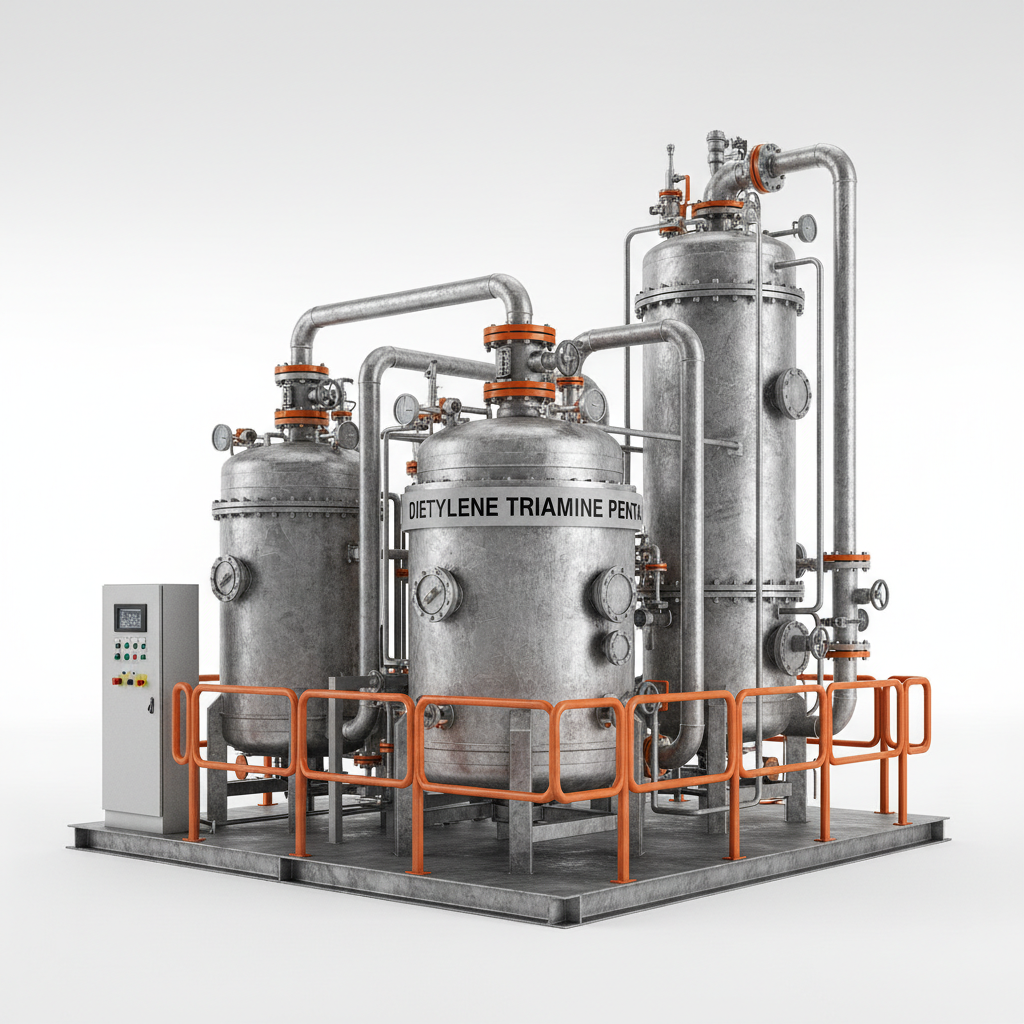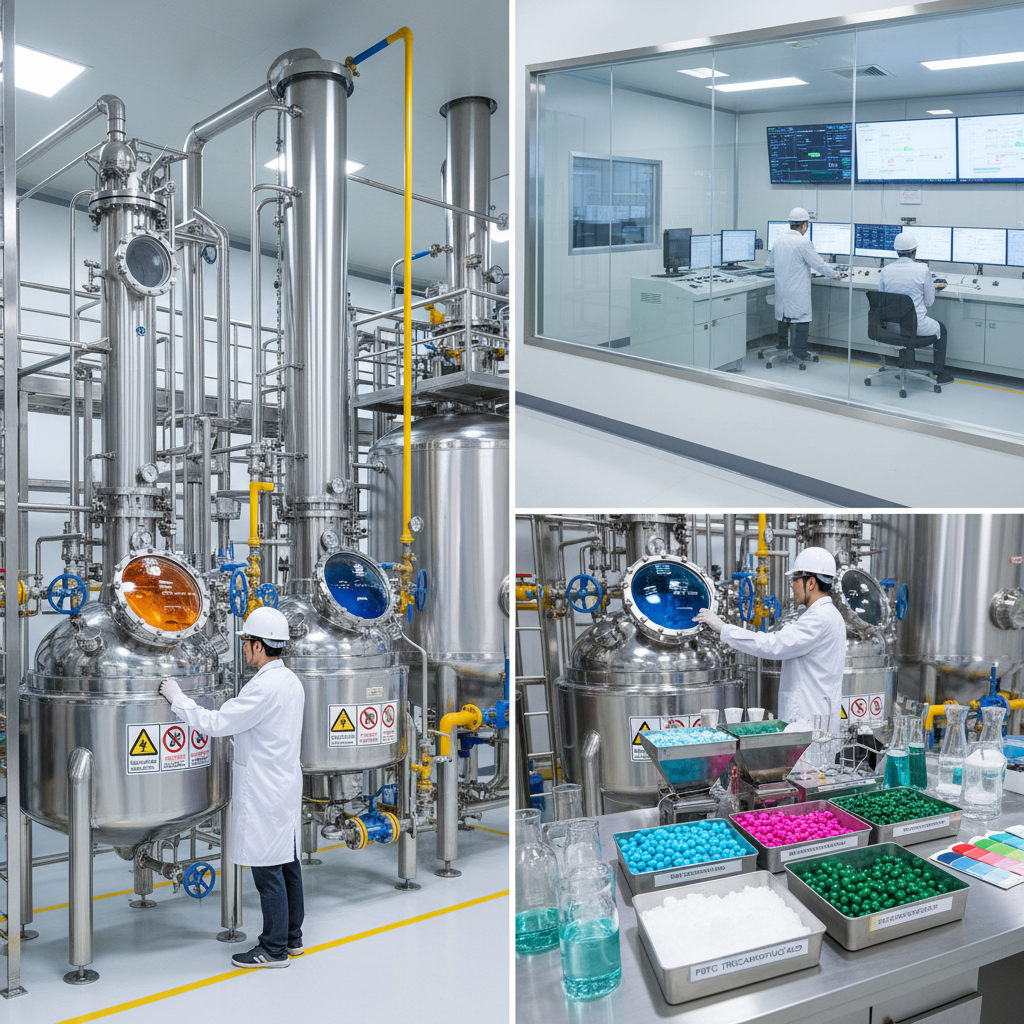
The landscape of specialized chemical synthesis is shifting toward more stringent biocidal efficacy and environmental compatibility, particularly in the context of atmp production and related quaternary ammonium compound manufacturing. As industrial water systems and hygiene sectors face increasing microbial resistance, the precision of active content concentration and molecular stability has become a primary engineering focal point.
This evolution is driven by the necessity to balance high-spectrum antimicrobial activity against bacteria, fungi, and enveloped viruses with the requirement for low toxicity and biodegradability. For procurement engineers and plant managers, the challenge lies in selecting formulations that maintain stability across varying water hardness levels while ensuring complete solubility and penetration in diverse industrial matrices.
This analysis examines the technical parameters of non-oxidizing biocides, specifically focusing on the role of Benzalkonium Chloride (BKC) in modern industrial applications. By dissecting the relationship between cationic surfactant properties and biocidal performance, we provide a framework for optimizing atmp production standards to meet global safety and efficacy benchmarks.


The efficacy of non-oxidizing biocides like Benzalkonium Chloride relies on the electrostatic attraction between the positively charged quaternary ammonium head and the negatively charged microbial cell membranes. This interaction disrupts the lipid bilayer, leading to cytoplasmic leakage and rapid cell death.
In the context of atmp production, maintaining the precise molecular weight (approx. 340.0) and the C21H38NCl formula is essential to ensure consistent penetrating properties across diverse organic loads.
The operational success of a biocide is dictated by its active content percentage. Standard industrial grades typically range between 48-52% or 78-82%, depending on the required concentration for specific applications. A higher active content allows for lower dosing volumes, reducing logistical costs and storage requirements in large-scale plants.
pH stability is another critical parameter; a range of 6.0 to 8.0 ensures that the product remains non-corrosive to metal infrastructure while maintaining its cationic charge. Deviations in pH can lead to reduced solubility or unexpected reactions when blended with other water treatment agents.
Furthermore, the limitation on amine salt content (maximum 1.0%) is vital for preventing unwanted precipitates in circulating cooling water. High purity levels are mandatory for applications in pharmaceuticals and food-grade sanitization, where residue accumulation must be minimized.
Engineering a biocide requires a delicate balance between lethal efficacy and environmental safety. While chlorinated biocides offer rapid kill rates, they often leave toxic residuals and contribute to the formation of halogenated organic compounds.
However, a critical engineering constraint is the incompatibility with anionic surfactants. Blending a cationic biocide with anionic agents results in the formation of inactive complexes, rendering the treatment ineffective. This requires strict segregation in dosing systems and precise sequence management in chemical injection.
The versatility of these compounds allows them to serve as both biocides and detergency agents. In the oil and gas sector, they function as sludge breakers and corrosion inhibitors, while in the textile industry, they act as moth repellents and dyeing retarders.
To evaluate the relative impact of atmp production outputs across different domains, we use a normalized engineering assessment based on efficacy, safety, and cost-efficiency.
In typical circulating cooling water systems, the preferred dosage for non-oxidizing biocides is 50-100 mg/L. For more aggressive sludge removal operations, the dosage is increased to 200-300 mg/L, though this requires the addition of an organosilyl antifoaming agent to prevent froth accumulation in the collecting tanks.
Integration with other fungicidal agents such as isothiazolinones or glutaraldehyde is often employed to create a synergistic effect, broadening the antimicrobial spectrum. However, operators must ensure that these are not combined with chlorophenols, as this would lead to chemical antagonism and reduced efficacy.
The industry is witnessing a clear transition away from chlorinated biocides due to global environmental regulations. The demand for safer, biodegradable alternatives is pushing R&D toward modifications of quaternary ammonium structures that maintain efficacy while accelerating environmental breakdown.
Future engineering requirements will likely focus on "smart dosing" systems that utilize real-time microbial sensing to adjust biocide levels. This will prevent overdosing, reduce chemical waste, and minimize the risk of developing resistant microbial strains within industrial biofilms.
Moreover, the expansion of these compounds into aquaculture for parasite removal and infectious disease prevention demonstrates the flexibility of the technology, provided that the purity levels are strictly controlled to avoid aquatic toxicity.
Selecting the right biocide grade requires an analysis of the operating environment, including water hardness, organic load, and required contact time. A high-purity grade is essential for food and pharmaceutical environments, whereas a standard industrial grade suffices for cooling towers and oil pipelines.
Procurement managers should evaluate the active content versus the total cost of ownership, considering that higher concentrations reduce the frequency of refills and lower the volume of waste handled.
The following matrix provides a comparative framework for different configuration profiles used in typical industrial deployment scenarios.
| Configuration Profile | Active Content | Efficacy Rating | Recommended Use Case |
|---|---|---|---|
| Basic Grade | 48-52% | Moderate | General Site Disinfection |
| Standard Industrial | 50-55% | High | Cooling Water Systems |
| High-Duty Profile | 78-82% | Very High | Oil Pipeline Sludge Removal |
| Precision Grade | >80% | Exceptional | Pharmaceutical Preservatives |
| Eco-Balanced | 50% (Biodegradable) | High | Aquaculture / Wood Protection |
| Industry Baseline | 50% Avg | Baseline | General Purpose Sanitization |
Benzalkonium Chloride acts as a non-oxidizing biocide that utilizes its cationic nature to bind to the negatively charged cell walls of microbes. This disrupts the cell membrane, causing leakage of intracellular components and resulting in cell death. It is particularly effective against algae, bacteria, and fungi at low ppm concentrations.
No, blending with anionic surfactants is strictly prohibited. Because the biocide is cationic (positively charged) and anionic surfactants are negatively charged, they will neutralize each other, forming an inactive precipitate. This destroys the antimicrobial properties of the solution and can cause fouling in the system.
One of the significant advantages of DDBAC/BKC is that its efficacy is largely unaffected by water hardness. Unlike some other chemical treatments that precipitate in the presence of calcium or magnesium ions, this quaternary ammonium compound remains soluble and active, making it ideal for hard water industrial environments.
For sludge removal applications, a higher dosage of 200-300 mg/L is generally preferred compared to the standard biocidal dose of 50-100 mg/L. It is critical to add an adequate organosilyl antifoaming agent during this process to manage the froth that naturally occurs during the breakdown of organic sludge.
Yes, due to its non-toxic, non-corrosive, and non-staining characteristics, it is widely used in the formulation of cleaner-sanitizers for the dairy industry, breweries, and food storage tanks. However, users must follow local regulatory guidelines regarding residue limits and rinsing protocols.
The product should be stored in a shady, dry room in its original plastic drums or IBC tanks. Under these conditions, the typical shelf life is one year. Avoid extreme temperatures and ensure the containers are tightly sealed to prevent contamination or evaporation of the active components.
The optimization of atmp production and the application of high-purity non-oxidizing biocides provide a robust solution for modern industrial microbial control. By aligning chemical specifications—such as active content and pH stability—with specific engineering requirements, operators can achieve high efficacy while reducing environmental impact.
As the industry moves toward smarter, more sustainable chemical management, the role of biodegradable cationic surfactants will only grow. The transition from aggressive chlorinated agents to precision-engineered biocides represents a necessary evolution in industrial water treatment and hygiene, ensuring both operational reliability and ecological responsibility.