Selecting a high-performance flocculant is rarely a matter of choosing a generic chemical; it is an exercise in matching molecular weight and charge density to the specific ionic profile of a wastewater stream. When the standard off-the-shelf options fail to meet stringent discharge limits or operational efficiency, the shift toward specialized procurement becomes necessary.
Industrial water treatment is currently facing a duality of challenges: the need for higher throughput in processing plants and the tightening of environmental regulations regarding residual chemical discharge. This has led many operators to seek customized formulations that optimize the aggregation of suspended solids while minimizing the overall dosage.
Whether managing municipal sewage or complex industrial effluent, understanding the nuances of oem flocculant sourcing allows firms to balance cost-per-cubic-meter against the purity of the treated output.


At its core, flocculation is the process of removing colloidal particles from a liquid. Most industrial contaminants carry a negative surface charge, creating a repulsive force that prevents natural aggregation. A flocculant works by neutralizing these charges or by creating physical bridges between particles.
The efficiency of an oem flocculant depends on its ability to rapidly destabilize these particles, allowing them to form larger, heavier "flocs" that settle quickly via gravity or can be easily filtered.
The selection of a polymer for water treatment is governed by three primary variables: molecular weight, charge density, and the monomer composition. High molecular weight polymers are typically used for "bridging," where long chains catch multiple particles, whereas low molecular weight, high-charge polymers are preferred for "charge neutralization" in highly stabilized colloids.
In specialized chemistry, such as that produced by Hebei Longke Water Treatment Co., Ltd., the focus is often on maintaining stability across varying pH levels. For instance, polycarboxylic antiscalants and dispersants are often paired with flocculants to prevent the premature precipitation of minerals before the target organic contaminants are captured.
Furthermore, the ionic nature of the flocculant—whether cationic, anionic, or non-ionic—must be strictly aligned with the zeta potential of the effluent. An incorrect charge selection can lead to "charge reversal," where particles actually repel each other more strongly, rendering the treatment process ineffective.
Maximum efficiency in water treatment is rarely achieved by a single agent. Instead, a synergistic approach utilizing a primary coagulant followed by a secondary flocculant is often employed to ensure both the destabilization of particles and the growth of large, shear-resistant flocs.
Synergy in flocculation is achieved when the primary coagulant reduces the electrical double layer of the particles, allowing the subsequent long-chain polymer to bridge the remaining gap, drastically reducing the total chemical volume required.
For systems dealing with biological slime or algae, the addition of a non-oxidizing biocide, such as Benzalkonium Chloride (BKC), can prevent the organic "coating" of particles that often hinders flocculant attachment. By removing the biological interference, the flocculant can act directly on the inorganic core of the suspended solids.
When evaluating different oem flocculant options, operators often use a relative value index to compare settling velocity, sludge volume, and residual turbidity. A higher value in these categories generally indicates a more efficient polymer chain architecture.
The following data illustrates a conceptual comparison of different polymer types based on their efficacy across various industrial water conditions, highlighting how tailored formulations outperform generic alternatives in high-turbidity scenarios.
In high-load industrial settings, such as refining or steel manufacturing, the point of injection for the flocculant is critical. Injecting too early can lead to polymer degradation due to excessive turbulence, while injecting too late may not allow sufficient residence time for floc growth before the water reaches the clarifier.
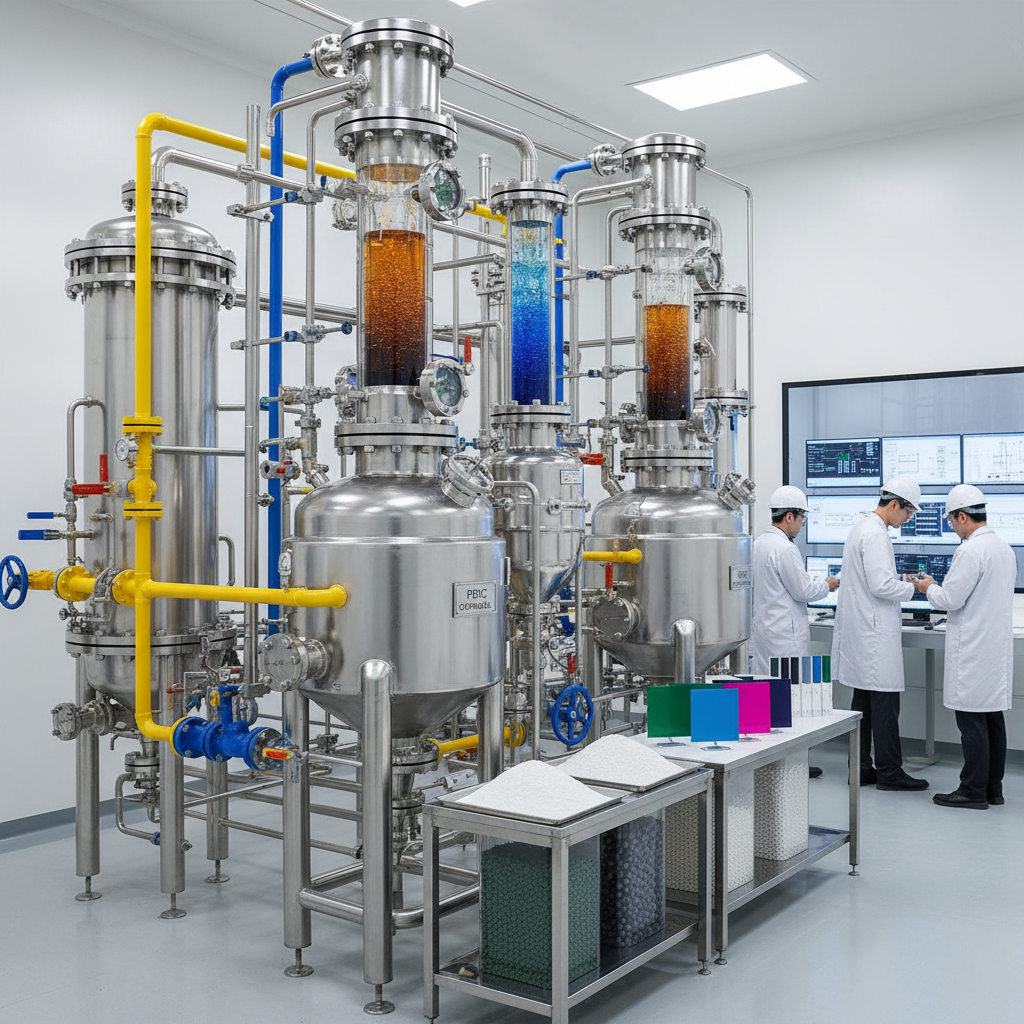
Successful integration requires a precise balance of flash mixing (high energy) and flocculation (low energy). A typical industrial setting will employ a series of baffled tanks to ensure that the oem flocculant is evenly distributed without shearing the newly formed flocs.
The chemical industry is currently shifting away from persistent synthetic polymers toward biodegradable antiscalants and dispersants. This trend is driven by the increasing toxicity of conventional acrylamides and the regulatory pressure to reduce the "chemical footprint" of treated water discharged into natural waterways.
Newer generations of flocculants utilize modified natural starches or cellulose derivatives. While these sometimes require higher dosages than synthetic versions, their environmental safety profile makes them the preferred choice for aquaculture and food-grade processing plants.
The challenge remains in achieving the same "sweep flocculation" efficiency as synthetic polymers. However, the integration of hybrid systems—combining a small amount of high-efficiency synthetic polymer with a bulk of biodegradable agents—is providing a viable middle ground for most industrial operators.
When deciding between a standard commercial product and a custom oem flocculant, the decision should be based on the stability of the influent water. If the water chemistry (pH, turbidity, ionic strength) fluctuates wildly, a highly specialized, narrow-spectrum polymer may fail.
Conversely, for plants with a consistent waste stream, a custom-tailored formulation can reduce chemical consumption by 15-30% and significantly lower the volume of sludge generated, which in turn reduces disposal costs.
The following table provides a selection framework based on typical industrial requirements, helping operators align their technical needs with the appropriate chemical properties.
| Water Characteristic | Primary Need | Recommended Polymer Type | Critical Selection Factor |
|---|---|---|---|
| High Organic Load | Charge Neutralization | High-Charge Cationic | Charge Density |
| Mineral-Rich Water | Anti-Scaling/Flocculation | Polycarboxylic Hybrid | pH Stability |
| Colloidal Silicates | Bridging/Aggregation | High-MW Anionic | Molecular Weight |
| Biologically Active | Slime Control/Settling | BKC + Flocculant Mix | Biocidal Synergy |
| Variable pH Stream | Consistent Performance | Non-ionic / Amphoteric | Isoelectric Point |
| Environmental Strict | Low Residual Toxicity | Biodegradable Poly | Degradation Rate |
A standard commercial grade is designed for general applicability across a wide range of water types, often resulting in sub-optimal performance for specific industries. An OEM flocculant is custom-formulated to match the specific molecular weight and charge density required for a particular wastewater's zeta potential, leading to lower dosages and faster settling times.
High water hardness, caused by excess calcium and magnesium ions, can interfere with the electrostatic attraction between the flocculant and the particles. In such cases, using a product like BKC or specific polycarboxylic dispersants can help maintain the efficiency of the flocculation process by preventing mineral interference.
Generally, no. Cationic and anionic polymers will react with each other to form a complex, effectively neutralizing both and causing them to precipitate out of the water before they can interact with the contaminants. They must be applied in separate stages or carefully sequenced with a coagulant in between.
Over-dosing can lead to "restabilization," where the particles become saturated with the polymer, causing them to acquire a new charge that makes them repel each other again. This results in cloudy water and poor settling, while simultaneously increasing the cost of chemical consumption and sludge disposal.
Most specialized flocculants and biocides should be stored in a cool, dry, and shady environment. For instance, BKC solutions are typically kept in plastic drums or IBC tanks and stored away from direct sunlight and extreme temperatures to prevent polymer degradation or chemical instability over their one-year shelf life.
While biodegradable options may require a slightly higher dosage to achieve the same result, they are often more sustainable and less toxic. In many aquaculture and food-processing applications, the trade-off is acceptable to meet environmental safety standards and reduce the risk of chemical residue in the final product.
The optimization of industrial water treatment is an ongoing process of calibration. As effluents become more complex and environmental regulations more stringent, the reliance on generic chemical solutions is diminishing in favor of high-precision, tailored chemistry.
By integrating the right combination of flocculants, biocides, and antiscalants, enterprises can not only ensure regulatory compliance but also significantly reduce their operational expenditure through decreased chemical waste and improved sludge management.