phosphonate compounds represent a crucial class of organophosphorus molecules with broad applications across numerous industries. Their unique properties, stemming from the carbon-phosphorus bond, make them invaluable in areas ranging from water treatment and agriculture to pharmaceuticals and materials science. Understanding the intricacies of phosphonate chemistry is becoming increasingly important as we seek sustainable solutions for global challenges.
The demand for effective and environmentally responsible chemical solutions continues to rise globally. phosphonate-based technologies are uniquely positioned to address these needs due to their versatility and tailored functionality. From preventing scale formation in industrial water systems to acting as bone-seeking agents in medical therapies, their impact is far-reaching and continues to expand.
Ultimately, a deeper appreciation of phosphonate chemistry translates to innovative product development, improved process efficiency, and a reduced environmental footprint, driving economic growth and enhancing quality of life worldwide.
Introduction to phosphonate Chemistry
The study of phosphonate chemistry is foundational for understanding a vast array of industrial processes and biological mechanisms. These compounds are distinct from phosphates, possessing a direct carbon-phosphorus bond which confers greater stability and unique reactivity. This structural difference dictates their behavior in various environments.
Originally developed for specialized applications like corrosion inhibition and scale control, phosphonate compounds have diversified to impact fields such as drug discovery, materials science, and environmental remediation. Their adaptability continues to fuel research and development efforts.
Defining phosphonate Structures and Properties
Phosphonates are characterized by the general formula R-PO(OH)₂, where 'R' represents an organic substituent. This structure imparts several key properties, including strong coordination capabilities with metal ions, high thermal stability, and resistance to hydrolysis compared to phosphate esters.
The presence of the P-C bond also allows for tailored functionality by modifying the organic substituent 'R', enabling the creation of phosphonates with specific solubility, reactivity, and biological activity profiles. This tunability is a major driver of their widespread adoption.
Furthermore, phosphonates often exhibit excellent biodegradability, making them a preferred alternative to other, less environmentally friendly compounds in many applications. The balance between performance and sustainability makes them increasingly attractive.
Key Characteristics of phosphonate Molecules
One significant characteristic of phosphonates is their strong chelating ability. This means they readily bind to metal ions, preventing their precipitation and corrosion. This property is critical in water treatment and industrial cleaning applications.
Another important feature is their high thermal and chemical stability. Phosphonates can withstand harsh conditions without significant degradation, making them suitable for high-temperature processes and aggressive chemical environments.
Furthermore, the ability to tailor the R-group attached to the phosphonate moiety allows for the modification of solubility, lipophilicity, and other key physicochemical properties, customizing the molecule for specific applications. This control is essential for optimal performance.
Applications Driving phosphonate Demand
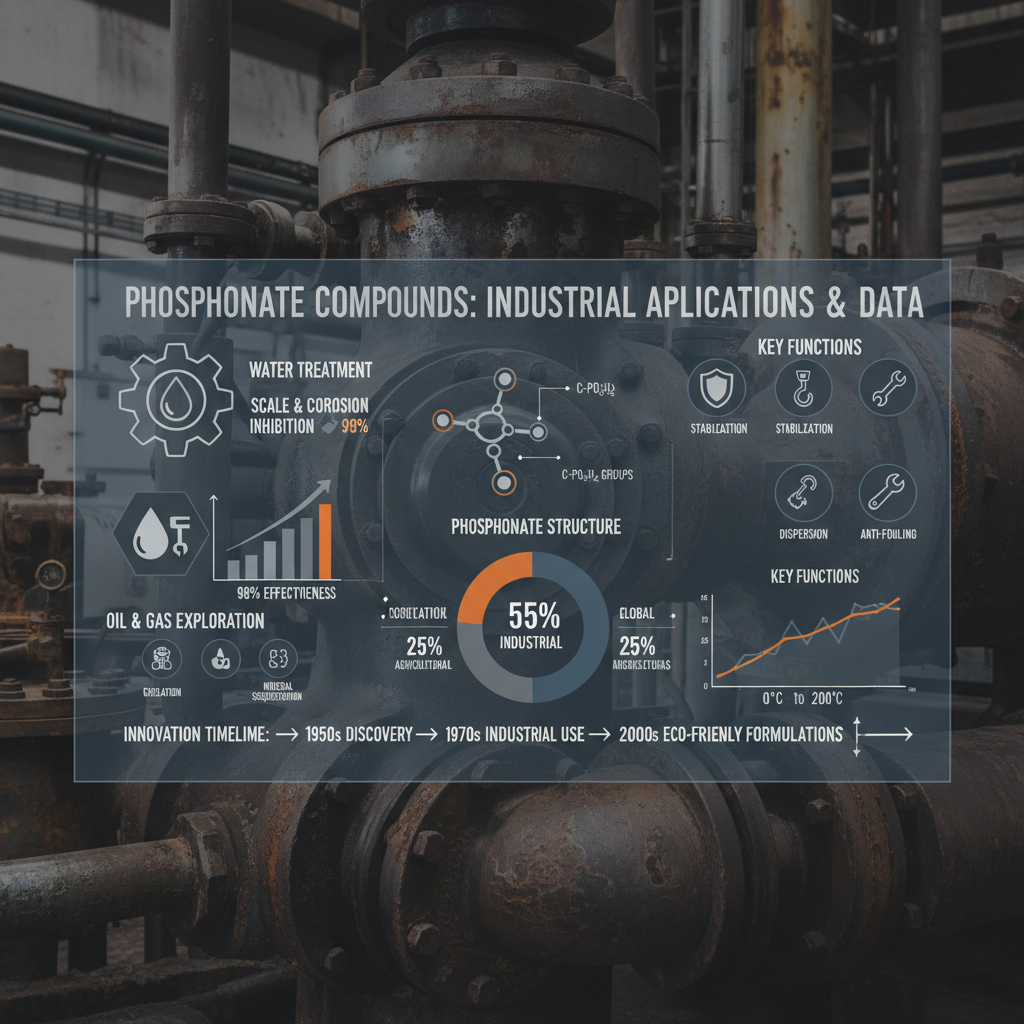
The demand for phosphonates is largely driven by their effectiveness in preventing scale formation in industrial cooling water systems and boilers. Scale buildup reduces efficiency and can cause equipment failure, leading to significant economic losses.
Another significant application is in detergent formulations, where phosphonates act as builders, enhancing cleaning performance by sequestering hardness ions. This allows detergents to work more effectively at lower temperatures.
phosphonate Performance Across Different Industries
Global Industries Utilizing phosphonate Technology
The power generation industry is a major consumer of phosphonates, utilizing them to maintain the efficiency of cooling water systems in power plants. The oil and gas industry employs them to prevent scale formation in pipelines and oilfield operations.
In the agricultural sector, phosphonates are utilized as systemic fungicides, offering protection against plant diseases. Their ability to be absorbed by plants and translocated throughout the tissues provides long-lasting protection.
Advantages and Long-Term Value of phosphonate Solutions
Phosphonate-based solutions offer significant cost savings by preventing equipment damage and improving operational efficiency. Their effectiveness translates to reduced maintenance costs and increased lifespan of critical infrastructure.
Furthermore, their biodegradability and lower toxicity compared to some alternative chemicals contribute to enhanced environmental sustainability. This aligns with growing global concerns about environmental responsibility and regulatory compliance.
The reliability and consistent performance of phosphonates foster trust and long-term partnerships between suppliers and customers. This stability is crucial for industries where uninterrupted operation is paramount.
Future Trends and Innovations in phosphonate Research
Ongoing research focuses on developing novel phosphonate-based materials for advanced applications, such as biomedical implants and drug delivery systems. Their biocompatibility and ability to bind to bone tissue make them ideal candidates.
The integration of phosphonate chemistry with nanotechnology holds promise for creating highly efficient catalysts and targeted therapies. These innovations could revolutionize various industrial processes and healthcare treatments.
Furthermore, efforts are underway to develop more sustainable production methods for phosphonates, utilizing renewable feedstocks and reducing waste generation. This aligns with the principles of circular economy and green chemistry.
Summary of phosphonate Research and Development Focus Areas
| Research Area |
Innovation Focus |
Potential Impact |
Current Development Stage |
| Biomedical Applications |
Bone-seeking materials for implants |
Improved implant integration and longevity |
Pre-clinical testing |
| Catalysis |
Novel phosphonate-based catalysts |
Increased reaction efficiency and selectivity |
Laboratory research |
| Drug Delivery |
Targeted drug delivery systems |
Reduced side effects and improved therapeutic efficacy |
Early-stage development |
| Water Treatment |
Enhanced scale inhibition |
Reduced energy consumption and maintenance costs |
Commercialization |
| Sustainable Chemistry |
Bio-based phosphonate production |
Reduced environmental impact |
Pilot plant stage |
| Materials Science |
Advanced coatings and polymers |
Improved material properties and durability |
Research and development |
FAQS
phosphonate scale inhibitors offer several advantages, including superior performance in high-temperature and high-alkalinity environments, enhanced solubility, and reduced environmental impact due to their biodegradability. Unlike some traditional methods that rely on heavy metals or hazardous chemicals, phosphonates provide a more sustainable and effective solution for scale control.
The unique structure of phosphonate, featuring a direct carbon-phosphorus bond and multiple hydroxyl groups, enables strong chelation with metal ions. This chelation forms a protective layer on metal surfaces, preventing corrosion by hindering the electrochemical reactions that cause metal degradation. This strong binding affinity makes phosphonates highly effective corrosion inhibitors.
Many phosphonate-based products are considered environmentally friendly due to their biodegradability. While complete degradation depends on environmental conditions, phosphonates generally break down into less harmful substances, minimizing their long-term impact. However, specific formulations and concentrations should be evaluated to ensure compliance with local regulations.
phosphonates are widely used in agriculture as systemic fungicides, particularly for controlling diseases like Phytophthora and downy mildew. Their systemic nature allows them to be absorbed by plants and transported throughout their tissues, providing long-lasting protection. They are also used as micronutrient delivery agents, enhancing plant health and yield.
While generally considered safe, phosphonate compounds can cause mild skin and eye irritation. It is recommended to wear appropriate personal protective equipment (PPE), such as gloves and safety glasses, when handling them. Always consult the Safety Data Sheet (SDS) for specific handling and emergency procedures.
Yes, phosphonates are often used in combination with other water treatment chemicals, such as polymers and biocides, to achieve synergistic effects. This approach can provide broader spectrum control of scale, corrosion, and biofouling. However, compatibility testing is crucial to avoid adverse reactions or reduced efficacy.
Conclusion
In conclusion, phosphonate chemistry offers a versatile and impactful toolkit for addressing a wide range of industrial, agricultural, and biomedical challenges. Their unique properties – including strong chelation, thermal stability, and biodegradability – position them as crucial components in sustainable solutions for a rapidly changing world. Understanding the nuances of phosphonate behavior is increasingly essential for innovation and optimization across numerous sectors.
Looking ahead, continued research and development focused on novel phosphonate-based materials and sustainable production methods will unlock even greater potential. By embracing these advancements, we can harness the power of phosphonate chemistry to drive economic growth, protect the environment, and improve the quality of life for generations to come. For more information and innovative solutions, visit our website: www.lkpbtc.com