

LK-319 High-Performance Scale & Corrosion Inhibitor
Field Notes on the LK-319 Scale and Corrosion Inhibitor: What’s Working in Today’s Steel Plants
You’d be surprised how often a “simple” cooling-water tweak saves a shutdown. The lk-319 Scale and Corrosion Inhibitor has been popping up in my notebook more than once this year—particularly across iron and steel facilities fighting calcium carbonate and phosphate fouling while trying to protect carbon steel. To be honest, high cycles of concentration and tighter discharge permits are forcing a rethink: low-phosphorus, high-dispersion chemistry is the new normal.
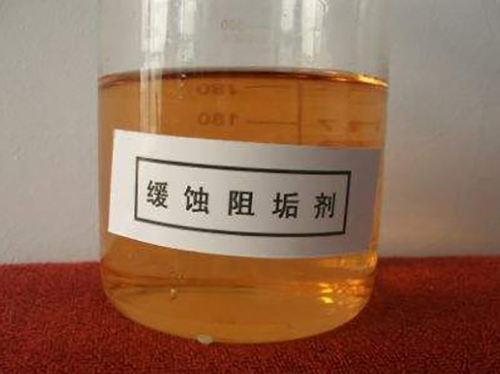
What it is (and why it’s trending)
The formula combines organic phosphonic acids with polycarboxylic dispersants and a carbon-steel corrosion inhibitor. In practice, that means strong chelation and dispersion of CaCO3/Ca3(PO4)2 plus a protective film on mild steel. Many customers say they chose lk-319 because it balances deposit control with a low phosphorus load—useful when regulators look closely at phosphate discharge. Origin, for those who care about logistics: No. 3, North of Haohua East Road, North Park, Neiqiu County Industrial Zone, Xingtai City, Hebei Province.
Typical specifications (real‑world use may vary)
| Item | Spec (≈) | Notes |
| Appearance | Clear to light-amber liquid | Minor tint variation normal |
| Active content | ≈ 30–40% w/w | Phosphonate + polycarboxylate blend |
| Density (20°C) | ≈ 1.10–1.20 g/cm³ | For feeder calibration |
| pH (1% solution) | ≈ 2.0–3.0 | Acidic; handle accordingly |
| Recommended dose | ≈ 10–30 mg/L (as product) | Based on water chemistry and LSI |
| Operating pH window | ≈ 6.5–9.5 | Steel-friendly range |
| Shelf life | 12 months | Keep sealed; avoid freezing |
Where it’s used
Iron & steel plant recirculating cooling water (blast furnace stoves, caster secondary cooling, closed loops), power plant aux systems, coking units, and general industrial cooling towers running moderate to high cycles. I’ve also seen lk-319 used in heat-exchanger networks where Ca hardness is >250 mg/L as CaCO3.
Process flow, testing, and verification
Materials: organic phosphonic acids (e.g., HEDP/ATMP family), polycarboxylate dispersants, and a carbon-steel corrosion inhibitor package. Methods: continuous dosing via metering pump, shot feed during startups, and periodic bio-control coordination (because slime defeats any inhibitor, frankly).
Testing standards we see in bids: static bottle tests for CaCO3/Ca3(PO4)2 inhibition (per GB/T 16632 guidance), carbon-steel coupon exposure per ASTM G31/NACE TM0169, and occasionally salt spray verification (ISO 9227) for parts handling. Acceptance criteria commonly target a corrosion rate ≤ 0.075 mm/y and ≥ 90% scale inhibition at stress LSI ≈ +1.5 to +2.0.
Field data point: on a 40°C recirculating loop (Ca hardness ≈ 280 mg/L as CaCO3, pH 8.2, cycles ~4.3), lk-319 at 20–25 mg/L cut coupon corrosion from ≈0.18 mm/y to ≈0.06 mm/y and reduced CaCO3 deposition rate by around 70–80%. Your mileage may vary with alkalinity and chloride load.
Advantages and customization
- Low-P, high-dispersion approach for tighter discharge limits.
- Good steel passivation; stabilizes film in about 7–10 days.
- Customization: low-phosphorus or phosphorus-free variants, tracer dye for online monitoring, biocide pairing guidance, and packaging from 25 kg to IBCs. Custom SKUs of lk-319 for high-silica waters are available on request.
Mini case study (northern China steel mill)
After switching to lk-319 and nudging setpoints (pH 8.1 → 8.3; cycles 4.0 → 4.6), the mill reported a 32% drop in heat-exchanger approach temperature drift over 90 days and fewer tube leak incidents (informal maintenance logs). Operators liked the predictable residual and the fact it didn’t foam much—small things, big difference.
Vendor snapshot: how it stacks up
| Vendor | Lead time | Customization | Docs & certs | Notes |
| LKP (Hebei) – lk-319 | ≈ 7–15 days | High (low‑P, tracer, packaging) | ISO 9001/14001, MSDS, test reports | Factory origin; competitive at volume |
| Domestic generic | ≈ 3–10 days | Medium | Basic COA/MSDS | Specs vary; vet carefully |
| Imported brand | ≈ 3–6 weeks | Medium–High | Broad portfolio; audits | Premium pricing |
Compliance and paperwork
Available documentation typically includes COA, MSDS, and system curve recommendations. ISO 9001/14001 management system certificates are provided on request; third‑party test summaries can be appended to bids. If you need REACH or RoHS status for exports, ask early—saves time.
Practical tips
- Calibrate feeders using density; verify residual weekly until stable.
- Track corrosion via coupons or LPR; aim ≤ 0.075 mm/y for carbon steel.
- Coordinate with biocide program—biofilm undercuts any inhibitor, fast.
References:
[1] ASTM G31-21, Standard Guide for Laboratory Immersion Corrosion Testing of Metals, ASTM International.
[2] GB/T 16632-2008, General rules for water treatment agents, SAC (China).
[3] ISO 9227:2017, Corrosion tests in artificial atmospheres — Salt spray tests, ISO.
[4] Cooling Technology Institute, Guidelines for Control of Scaling and Corrosion in Open Recirculating Cooling Systems, CTI.
-
Comprehensive Analysis on Why Aluminum Chlorohydrate Safe for UseNewsApr.16,2026
-
Industrial Applications and Guide to Chloride of AluminiumNewsApr.09,2026
-
Exploring Aluminium Chloride Properties Applications and Sourcing InformationNewsApr.07,2026
-
Comprehensive Guide to Chloride Aluminium Properties Applications and SourcingNewsApr.04,2026
-
Understanding Aluminium Chloride Properties Applications and Sourcing DetailsNewsMar.31,2026
-
Understanding Aluminium Chloride Properties Applications and SourcingNewsMar.28,2026