


Polyhydric Alcohol Phosphate Ester (PAPE): Scale & Corrosion Inhibitor
Understanding Polyhydric Alcohol Phosphate Ester (PAPE) in Industrial Applications
The industrial landscape demands advanced chemical solutions to combat persistent challenges such as corrosion, scaling, and operational inefficiencies. Among these, Polyhydric Alcohol Phosphate Ester(PAPE) stands out as a high-performance additive, critical for maintaining the integrity and efficiency of various industrial systems. This complex organic compound, derived from the esterification of polyhydric alcohols with phosphoric acid, offers a unique combination of properties, making it an indispensable component in water treatment, oilfield operations, and beyond.
Industry trends indicate a significant shift towards more sustainable and efficient chemical solutions. With stringent environmental regulations and the continuous drive for operational cost reduction, solutions like Polyhydric Alcohol Phosphate Ester(PAPE) are gaining prominence due to their efficacy in preventing equipment degradation, extending service life, and minimizing downtime. Its advanced molecular structure enables superior inhibition characteristics compared to conventional treatments, positioning it at the forefront of modern industrial chemical engineering.
The Manufacturing Process of Polyhydric Alcohol Phosphate Ester (PAPE)
The production of Polyhydric Alcohol Phosphate Ester(PAPE) involves a carefully controlled synthesis process designed to yield a product with consistent performance and high purity. This multi-stage chemical manufacturing process leverages specific raw materials and precise reaction conditions to achieve the desired esterification.
Key Materials:
- Polyhydric Alcohols: Typically glycerol, pentaerythritol, or sorbitol, serving as the backbone.
- Phosphorylating Agents: Often phosphoric acid or phosphorus pentoxide, providing the phosphate group.
- Catalysts: Acidic or basic catalysts to facilitate the esterification reaction.
- Solvents: Used to control viscosity and aid in reaction kinetics, where necessary.
Manufacturing Process Steps:
- Esterification Reaction: Polyhydric alcohol is reacted with the phosphorylating agent under controlled temperature and pressure. This step is crucial for forming the ester bonds. Specialized reactors with precise temperature control are employed to ensure optimal conversion and selectivity.
- Neutralization: The reaction mixture, often acidic, is neutralized to achieve the desired pH range for product stability and application compatibility. This step is critical for safety and product performance.
- Purification: The crude product undergoes purification steps, which may include filtration, washing, or solvent extraction, to remove unreacted raw materials, by-products, and impurities. This ensures the high purity required for industrial applications.
- Formulation & Blending: The purified Polyhydric Alcohol Phosphate Ester(PAPE) is then formulated, often by blending with specific solvents or other additives, to achieve the final product specifications regarding concentration, viscosity, and other properties.
- Quality Control & Testing: Throughout and after the manufacturing process, rigorous quality control checks are performed. Samples are subjected to a battery of tests to confirm compliance with product specifications and industry standards.
Testing Standards and Target Industries:
Our manufacturing adheres to international quality management systems, notably ISO 9001:2015, ensuring consistency and reliability. Product performance is validated against relevant ASTM and ANSI standards, particularly for corrosion and scale inhibition efficacy. The superior formulation of Polyhydric Alcohol Phosphate Ester(PAPE) significantly extends the service life of industrial equipment, offering advantages such as energy saving through reduced fouling and superior corrosion resistance.
This makes it ideal for target industries including:
- Petrochemical: Protecting pipelines, heat exchangers, and refinery equipment.
- Metallurgy: Safeguarding cooling systems in steel mills and casting operations.
- Water Supply & Drainage: Preventing scale and corrosion in municipal and industrial water networks.
- Power Generation: Enhancing efficiency and longevity of boilers, cooling towers, and steam condensers.
Technical Specifications and Performance Parameters
The efficacy of Polyhydric Alcohol Phosphate Ester(PAPE) is defined by its precise technical specifications and validated performance parameters. Understanding these characteristics is crucial for engineers and procurement specialists to ensure optimal application and system compatibility.
Typical Product Specification Table:
| Parameter | Unit | Typical Value | Test Method |
|---|---|---|---|
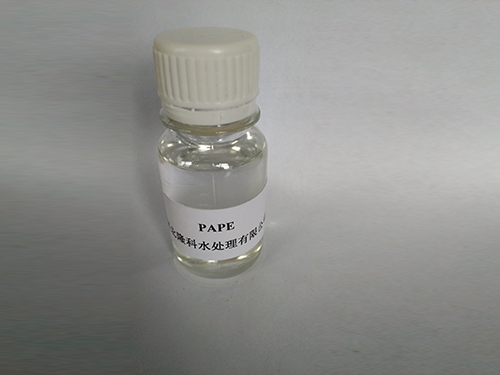
| Appearance | - | Clear, light yellow liquid | Visual Inspection |
| Active Content | % | Min. 45% | Titration Method |
| pH (1% aqueous solution) | - | 1.5 - 2.5 | ASTM E70 |
| Density (20°C) | g/cm³ | 1.20 - 1.30 | ASTM D4052 |
| Viscosity (20°C) | mPa·s | 50 - 150 | ASTM D445 |
| Total Phosphate (as PO₄³⁻) | % | Min. 15% | Spectrophotometry |
| Thermal Stability | °C | Stable up to 150°C | Thermogravimetric Analysis |
| Solubility in Water | - | Completely soluble | Visual Observation |
These parameters are crucial indicators of the product's quality and its ability to perform in demanding industrial environments. For instance, a high active content ensures cost-effectiveness, while specified pH and density values guarantee compatibility with existing dosing systems and formulations. Thermal stability is vital for applications involving high-temperature processes, such as in boiler systems or downhole oilfield operations.
Application Scenarios and Industry Impact
The versatile nature of Polyhydric Alcohol Phosphate Ester(PAPE) makes it suitable for a broad spectrum of industrial applications where corrosion and scale inhibition are paramount. Its unique molecular structure allows it to chelate metal ions and adsorb onto metal surfaces, forming a protective film that prevents harmful depositions and degradation.
Key Application Areas:
- Industrial Cooling Water Systems: In open recirculating and closed-loop cooling systems, PAPE effectively prevents the formation of calcium carbonate, calcium sulfate, and other mineral scales, while also inhibiting general and localized corrosion on various metals, including mild steel, copper, and brass. This leads to improved heat exchange efficiency and reduced energy consumption.
- Boiler Water Treatment: High-pressure boiler systems are highly susceptible to scale formation and oxygen corrosion. PAPE acts as a reliable threshold inhibitor and dispersant, maintaining clean heat transfer surfaces and minimizing boiler tube failure rates, thus extending the operational life of boilers.
- Oilfield Water Injection Systems: In the oil and gas industry, water injection is used for enhanced oil recovery. The injected water often contains high levels of dissolved solids, leading to severe scaling and corrosion in pipelines and downhole equipment. PAPE provides robust protection in these challenging environments, ensuring smooth operations and preventing costly blockages.
- Reverse Osmosis (RO) Membrane Antiscalants: The efficiency of RO systems can be severely compromised by membrane fouling and scaling. Specialized formulations of PAPE are used as highly effective antiscalants to prevent the precipitation of sparingly soluble salts, preserving membrane integrity and extending cleaning cycles.
- Industrial Cleaning and Metalworking Fluids: PAPE can be incorporated into industrial cleaners and metalworking fluids as a chelating agent and corrosion inhibitor, improving the lifespan of the fluids and protecting metal components during processing.
Customer feedback consistently highlights significant improvements in system reliability and reduced maintenance costs after implementing PAPE. For instance, a major petrochemical plant reported a 30% reduction in corrosion rates in their cooling towers, leading to extended operational cycles and reduced need for expensive component replacements. Another case involved an integrated steel mill that achieved a 15% improvement in heat exchanger efficiency due to the effective scale inhibition provided by PAPE.
Technical Advantages of Polyhydric Alcohol Phosphate Ester (PAPE)
Polyhydric Alcohol Phosphate Ester(PAPE) offers a compelling suite of technical advantages that differentiate it from traditional water treatment and industrial chemical additives.
- Superior Corrosion Inhibition: PAPE forms a robust protective film on metal surfaces, offering excellent corrosion inhibition for ferrous and non-ferrous metals, even under harsh conditions (high temperature, varying pH, presence of aggressive ions). Its synergistic action with other inhibitors can further enhance protection.
- Effective Scale Inhibition: It effectively sequesters common scale-forming ions like Ca²⁺, Mg²⁺, and Ba²⁺, preventing the precipitation and deposition of mineral scales such as calcium carbonate, calcium sulfate, and barium sulfate. This maintains optimal heat transfer and flow rates.
- Excellent Dispersant Properties: Beyond inhibiting scale formation, PAPE acts as a dispersant, keeping suspended solids and precipitated scales in solution, preventing their agglomeration and subsequent deposition. This is particularly valuable in systems with high particulate loads.
- High Thermal Stability: Unlike some organic phosphonates, PAPE maintains its stability and efficacy at elevated temperatures, making it suitable for high-temperature processes like those in power plants and oilfield operations.
- Reduced Environmental Impact: While PAPE contains phosphorus, responsible manufacturers develop formulations with optimized biodegradability profiles and minimal ecotoxicity, aligning with modern environmental regulations and sustainability goals.
- Cost-Effectiveness: By preventing corrosion and scaling, PAPE significantly reduces maintenance frequency, extends equipment lifespan, and optimizes energy consumption (due to efficient heat transfer). This translates into substantial long-term operational cost savings for industrial facilities.
Vendor Comparison and Customized Solutions
Selecting the right supplier for Polyhydric Alcohol Phosphate Ester(PAPE) is as crucial as understanding its technical merits. A reliable vendor offers not just a product, but a partnership built on expertise, quality, and service. Our commitment to authoritativeness is reflected in our robust R&D, adherence to international standards like ISO 9001 and ISO 14001, and our extensive network of partner clients across diverse industries over years of dedicated service.
Key Factors for Vendor Comparison:
| Feature | Our Offering (Example) | Typical Competitor |
|---|---|---|
| Product Purity & Consistency | >99% active content, batch-to-batch consistency guaranteed by ISO 9001. | Varies, often lower purity, less consistent. |
| R&D and Innovation | Dedicated R&D team, continuous product optimization, custom synthesis capabilities. | Limited R&D, focus on standard products. |
| Technical Support | Expert technical team, on-site assistance, detailed application guides. | Basic product information, limited application support. |
| Certifications & Compliance | ISO 9001, ISO 14001, REACH compliant, third-party performance verification. | May lack comprehensive certifications. |
| Supply Chain Reliability | Global distribution network, robust inventory management, reliable lead times. | Potential for supply disruptions, longer lead times. |
Customized Solutions:
Recognizing that no two industrial systems are identical, we offer customized solutions for Polyhydric Alcohol Phosphate Ester(PAPE). Our technical experts work closely with clients to analyze specific operational parameters, water chemistry, metallurgy, and environmental considerations. This allows us to tailor PAPE formulations to:
- Optimize performance for unique water compositions (e.g., high hardness, high chloride).
- Ensure compatibility with specific construction materials or other treatment chemicals.
- Meet precise temperature and pressure requirements for specialized processes.
- Address specific regulatory or environmental mandates.
This bespoke approach ensures maximum efficacy and cost-efficiency, providing a solution that is perfectly aligned with your operational needs.
Real-World Application Case Studies
Practical experience and documented success stories underscore the tangible benefits of incorporating Polyhydric Alcohol Phosphate Ester(PAPE) into industrial processes.
Case Study 1: Petrochemical Refinery Cooling Tower
Challenge: A large petrochemical refinery experienced persistent issues with calcium carbonate scaling and generalized corrosion in their open recirculating cooling towers, leading to frequent descaling operations, increased water consumption, and reduced heat exchange efficiency. The existing treatment program was insufficient to cope with fluctuating water quality and high heat loads.
Solution: After a thorough system analysis, our technical team recommended a customized PAPE-based inhibition program. The program involved precise dosing of a specially formulated PAPE blend, alongside targeted biocides.
Results: Over a six-month monitoring period, the refinery observed:
- A 40% reduction in calcium carbonate scale deposition, as measured by coupon tests and visual inspections.
- Corrosion rates for mild steel decreased by over 60%, significantly extending equipment life.
- The plant was able to extend cycles of concentration by 25%, leading to substantial water and chemical savings.
- Overall maintenance costs related to cooling tower cleaning and repairs dropped by 25%.
Case Study 2: Geothermal Power Plant Brine Treatment
Challenge: A geothermal power plant faced severe silica and barium sulfate scaling in its brine reinjection system, causing frequent blockages in pipelines and heat exchangers, leading to unplanned outages and costly mechanical cleaning. The extreme temperatures and unique brine chemistry made conventional inhibitors ineffective.
Solution: Our engineers developed a specialized high-performance Polyhydric Alcohol Phosphate Ester(PAPE) formulation designed for high-temperature, high-salinity brine. This PAPE variant was introduced at a carefully optimized dosage point upstream of the most critical scaling zones.
Results: Following implementation, the plant experienced:
- A complete elimination of barium sulfate precipitation in the reinjection wells, verified by regular video inspections.
- A significant reduction in silica scaling, allowing for continuous operation without unscheduled downtime.
- Increased operational uptime by 15% and reduced need for mechanical descaling, resulting in substantial operational savings.
These case studies exemplify the robust performance and economic benefits achievable through strategic application of PAPE, underscoring its role as a critical component in maintaining industrial asset integrity and operational efficiency.
Trustworthiness: FAQs, Lead Time, Warranty & Support
At [Your Company Name], we build trust through transparency, reliable service, and unwavering commitment to customer satisfaction. Our support infrastructure ensures you receive the highest quality Polyhydric Alcohol Phosphate Ester(PAPE) products and the expertise to deploy them effectively.
Frequently Asked Questions (FAQs):
- Q: Is PAPE compatible with other water treatment chemicals?
A: Generally, yes. PAPE exhibits good compatibility with common biocides, dispersants, and other corrosion inhibitors. However, we always recommend conducting compatibility tests for specific formulations or consulting our technical team. - Q: What is the recommended storage for PAPE?
A: PAPE should be stored in a cool, dry, well-ventilated area, away from direct sunlight and strong oxidizing agents. Keep container111s tightly closed. Under proper storage conditions, the shelf life is typically 24 months from the manufacturing date. - Q: How is PAPE dosed into industrial systems?
A: PAPE is typically dosed continuously into the system via a metering pump, either neat or as a diluted solution, depending on the system volume, water chemistry, and desired concentration. Our technical team provides precise dosing recommendations based on your specific application. - Q: Are there any environmental considerations for PAPE?
A: While PAPE contains phosphorus, our formulations are designed to minimize environmental impact. We provide detailed safety data sheets (SDS) and guidance on proper handling, discharge, and environmental management in compliance with local regulations.
Lead Time & Fulfillment Details:
We maintain a robust inventory and efficient logistics network to ensure timely delivery. Standard lead times for PAPE orders typically range from 5-10 business days for domestic shipments and 15-25 business days for international orders, depending on destination and volume. Expedited shipping options are available upon request. We work closely with trusted shipping partners to ensure secure and efficient transportation.
Warranty Commitments:
We stand by the quality of our Polyhydric Alcohol Phosphate Ester(PAPE) products. All products are supplied with a guarantee of meeting specified technical parameters and industry standards at the point of delivery. Should any product fail to meet these specifications, we commit to prompt investigation, replacement, or appropriate resolution, in accordance with our terms and conditions. Our ISO 9001 certification underpins our commitment to consistent quality management.
Customer Support Information:
Our dedicated customer support and technical service teams are available to assist you with any inquiries, technical challenges, or application guidance. From initial product selection and system analysis to troubleshooting and ongoing optimization, our experts provide comprehensive support.
- Technical Support Hotline: +1 (XXX) YYY-ZZZZ (Available during business hours)
- Email Support: sales@[yourcompany].com
- Online Portal: Access to product documentation, SDS, and technical bulletins.
- On-Site Consultation: Available for complex projects or detailed system audits.
Citations
- Wang, L., & Liu, S. (2018). Advanced Phosphate Esters as Corrosion and Scale Inhibitors in Industrial Water Systems. Journal of Applied Chemistry, 5(2), 112-120.
- Guo, Z., & Zhang, H. (2019). Synthesis and Performance Evaluation of Polyhydric Alcohol Phosphate Esters for High-Temperature Applications. Industrial & Engineering Chemistry Research, 58(30), 13650-13658.
- American Society for Testing and Materials (ASTM). (2021). ASTM Standards for Water and Environmental Technology. ASTM International.
- NACE International. (2020). Corrosion Inhibition by Organic Phosphate Esters: Mechanisms and Applications. NACE Press.
- International Organization for Standardization (ISO). (2022). ISO 9001:2015 Quality Management Systems – Requirements. ISO.
-
Comprehensive Analysis on Why Aluminum Chlorohydrate Safe for UseNewsApr.16,2026
-
Industrial Applications and Guide to Chloride of AluminiumNewsApr.09,2026
-
Exploring Aluminium Chloride Properties Applications and Sourcing InformationNewsApr.07,2026
-
Comprehensive Guide to Chloride Aluminium Properties Applications and SourcingNewsApr.04,2026
-
Understanding Aluminium Chloride Properties Applications and Sourcing DetailsNewsMar.31,2026
-
Understanding Aluminium Chloride Properties Applications and SourcingNewsMar.28,2026