

Scale and Corrosion Inhibition Dual Effect Pioneer: Scale Inhibitor
In the complex system of industrial production, carbon steel has become a commonly used material for various equipment manufacturing due to its excellent mechanical properties and economy. However, in environments containing scale and corrosive media, carbon steel equipment is highly susceptible to the dual threats of scaling and corrosion. Special agents with both scale and corrosion inhibition functions have emerged, and limescale inhibitors are like sturdy guardians of equipment, playing a crucial role in protecting carbon steel and becoming an important guarantee for stable industrial operation.
The protection of carbon steel by this type of scale inhibitor is due to its unique mechanism of action
In terms of scale inhibitor water treatment, drug molecules can chelate with calcium and magnesium ions in water to form stable complexes, preventing the growth and deposition of scale crystals; In terms of corrosion inhibition, the drug molecules will form a dense protective film on the surface of carbon steel, which acts as a strong armor, effectively isolating the direct contact between carbon steel and corrosive media, while suppressing the electrochemical reaction on the metal surface and slowing down the corrosion process. This dual action mechanism fundamentally solves the harm of scale and corrosion to carbon steel equipment.
Compared to ordinary Scale Inhibitors, Scale Inhibitors with good corrosion inhibition on carbon steel exhibit significant advantages in performance
The water scale inhibitor has high scale inhibition efficiency and can adapt to different water quality conditions. Whether it is high hardness water or complex industrial circulating water, it can effectively inhibit the formation of scale. In terms of corrosion inhibition performance, through special formula optimization, the corrosion rate of carbon steel can be significantly reduced. After professional testing, the annual corrosion rate of carbon steel can be controlled at an extremely low level under specific working conditions, significantly extending the service life of equipment. Moreover, this agent has strong chemical stability, a wide range of applicable pH values, good compatibility with other water treatment agents, and can work synergistically to further improve water treatment efficiency.
In practical industrial applications, the presence of such Scale Inhibitors is widespread in multiple fields
In the chemical industry, it can effectively protect equipment such as reaction vessels and pipelines made of carbon steel materials, prevent leaks and failures caused by scaling and corrosion, and ensure production safety and stability; In the power industry, it is used to protect carbon steel boilers, condensers and other equipment, ensure efficient operation of the thermal system, and reduce downtime and maintenance costs caused by equipment damage; In HVAC systems, protecting carbon steel pipes and heat exchangers, maintaining the system's heat exchange efficiency, and reducing energy consumption. It can be said that wherever carbon steel equipment operates, there are scale and corrosion inhibitor for cooling tower to provide protection.
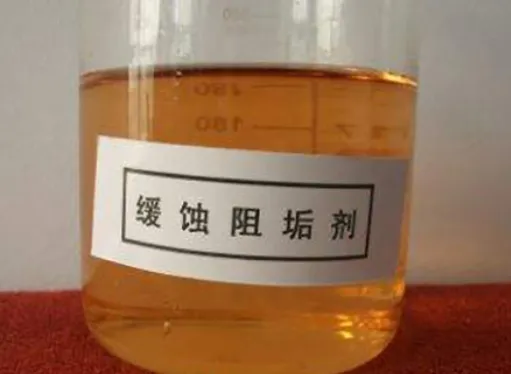
With the continuous development of industrial technology, Scale Inhibitors, which have good corrosion inhibition effects on carbon steel, are also continuously innovating and upgrading
The R&D personnel further enhance the scale and corrosion inhibition performance of the drug through the application of new synthesis processes and materials; By combining big data and artificial intelligence technology, an intelligent monitoring and precise dosing system has been developed, which can adjust the dosage of chemicals in real time according to changes in water quality, while ensuring effectiveness and reducing costs; At the same time, the concept of green environmental protection runs through the research and production process, and new formulas with low toxicity and easy degradation have been developed, which meet the requirements of sustainable development.
A chemical agent that combines scale and corrosion inhibition functions, with its unique mechanism of action, outstanding performance advantages, wide application scenarios, and continuous innovative development, has become a reliable partner for carbon steel equipment to resist scaling and corrosion. They not only ensure the stable operation of carbon steel equipment, improve industrial production efficiency, but also reduce equipment maintenance and replacement costs. On the path towards high-quality industrial development, such Scale Inhibitors will continue to innovate, building stronger protective barriers for carbon steel equipment with stronger performance and more environmentally friendly features, and helping industrial production run steadily and far.
Scale Inhibitor FAQs
What is Scale Prohibitor? What is its effect on carbon steel?
Scale inhibitor is a chemical agent used to prevent the deposition of inorganic salt scales (such as calcium carbonate and calcium sulfate) in water systems. For carbon steel equipment, high-quality Scale Inhibitors can not only inhibit scaling, but also form a protective film on the metal surface, slow down corrosion (i.e. corrosion inhibition effect), and extend equipment life.
How can Scale Inhibitors achieve corrosion inhibition effect on carbon steel?
The corrosion inhibition mechanism usually includes:
Film formation protection: Some Scale Inhibitors (such as formulas containing phosphates and organic phosphonates) will adsorb onto the surface of carbon steel, forming a dense passivation film to isolate corrosive media (such as oxygen and chloride ions).
Dispersion effect: By dispersing iron oxide particles in water, the risk of local electrochemical corrosion is reduced.
Synergistic effect: When combined with corrosion inhibitors such as zinc salts and azoles, it can enhance the comprehensive protection of carbon steel.
What are the common types of Scale Inhibitors suitable for carbon steel?
Organic phosphonic acids (such as HEDP, ATMP): have both scale and corrosion inhibition functions, especially suitable for high hardness water quality.
Polymers (such as polyacrylic acid and maleic anhydride copolymers): scale inhibition is achieved through lattice distortion, and some products containing carboxyl groups can adsorb onto the surface of carbon steel.
Composite formula: containing phosphonate, copper corrosion inhibitor (BTA), etc., designed for carbon steel and multi metal systems.
How to evaluate the corrosion inhibition performance of Scale Inhibitors on carbon steel?
This can be verified through the following experiments:
Weight loss method: Compare the corrosion rate of carbon steel specimens before and after drug addition (unit: mm/a).
Electrochemical testing: such as polarization curve, impedance spectrum, analyze the stability of passivation film.
On site monitoring: Observe the thickness of the scale layer and pitting corrosion on the inner wall of the carbon steel pipeline.
What should be noted when using Scale Inhibitor to protect carbon steel?
PH adaptability: Most Scale Inhibitors need to exhibit optimal corrosion inhibition under neutral to weakly alkaline (pH 7-9) conditions.
Concentration control: Insufficient dosage may lead to local corrosion, while excessive dosage may cause chemical deposition.
Compatibility: Avoid direct mixing with oxidizing disinfectants (such as chlorine) to prevent the corrosion of carbon steel from worsening.
-
Comprehensive Analysis on Why Aluminum Chlorohydrate Safe for UseNewsApr.16,2026
-
Industrial Applications and Guide to Chloride of AluminiumNewsApr.09,2026
-
Exploring Aluminium Chloride Properties Applications and Sourcing InformationNewsApr.07,2026
-
Comprehensive Guide to Chloride Aluminium Properties Applications and SourcingNewsApr.04,2026
-
Understanding Aluminium Chloride Properties Applications and Sourcing DetailsNewsMar.31,2026
-
Understanding Aluminium Chloride Properties Applications and SourcingNewsMar.28,2026