

Comprehensive Guide to Flocculant Material and Its Industrial Applications
Understanding Flocculant Material: A Comprehensive Guide
Flocculant materials are essential in numerous industrial processes, playing a crucial role in water treatment, mining, paper manufacturing, and more. These substances promote the clumping together of suspended particles, facilitating their removal from liquids. Selecting the right flocculant material is critical for optimizing efficiency and achieving desired results. This article will delve into the various types of flocculants, their applications, factors influencing their effectiveness, and considerations for choosing the best solution for your needs. Ensuring optimal performance through informed selection is paramount for cost-effectiveness and environmental responsibility.
What is Flocculant Material and How Does it Work?
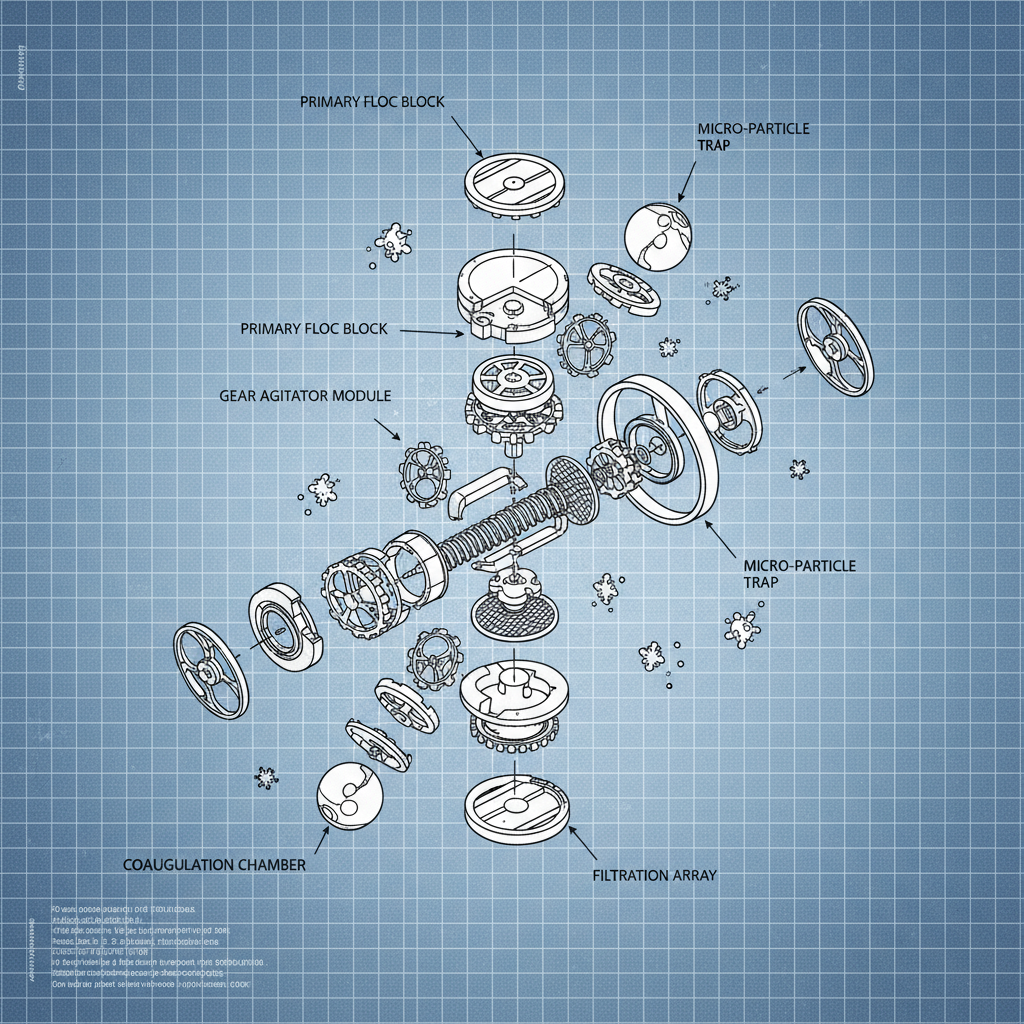
Flocculant materials work by neutralizing the electrostatic charges that keep suspended particles dispersed in a liquid. These particles, often negatively charged, repel each other, preventing them from settling. Flocculants, typically polymers with high molecular weight, adsorb onto the particle surfaces, bridging the gaps and forming larger, heavier aggregates known as "flocs". These flocs then readily settle out of the solution through sedimentation or are easily removed by filtration. The process is fundamentally different from coagulation, which destabilizes particles but doesn't necessarily lead to large floc formation. Understanding this distinction is key to selecting the right treatment approach. LKPTBC offers a comprehensive range of flocculants tailored to various applications.
Key Highlights: Flocculants neutralize electrostatic charges, promote floc formation, and facilitate particle removal through sedimentation or filtration. They differ from coagulants by building larger aggregates instead of just destabilizing particles.
Types of Flocculant Materials
Flocculants are broadly categorized into natural and synthetic types. Natural flocculants, such as chitosan (derived from shellfish shells) and starch, are biodegradable and environmentally friendly, but often less efficient than their synthetic counterparts. Synthetic flocculants, primarily polyacrylamides, are available in various forms – anionic, cationic, and non-ionic – each suited to different applications. Anionic flocculants are effective for positively charged particles, cationic for negatively charged particles, and non-ionic are useful when the charge is unknown or minimal. The choice depends on the characteristics of the suspended solids and the liquid medium. Understanding these distinctions is vital for optimal performance.
Flocculant Types:
• Natural: Chitosan, Starch – Biodegradable, lower efficiency
• Synthetic: Polyacrylamides – High efficiency, available as anionic, cationic, and non-ionic
Anionic vs. Cationic Flocculants: A Comparative Analysis
Choosing between anionic and cationic flocculants depends largely on the charge of the suspended particles. Anionic flocculants, carrying a negative charge, are best suited for treating positively charged particles, commonly found in wastewater treatment. Cationic flocculants, with a positive charge, are effective for negatively charged particles, prevalent in mining and mineral processing. Using the wrong type can actually hinder flocculation. Often, jar tests are conducted to determine the optimal flocculant type and dosage for a specific application.
Factors Affecting Flocculant Effectiveness
Several factors can influence the effectiveness of flocculant materials. These include pH, temperature, shear forces, and the concentration of suspended solids. Optimal pH ranges vary depending on the flocculant type. Temperature can affect polymer solubility and chain flexibility. Excessive shear forces, such as those created by aggressive mixing, can break up flocs. A higher concentration of suspended solids generally requires a higher flocculant dosage. Careful monitoring and adjustment of these parameters are essential for maximizing performance. Contact LKPTBC for expert advice on optimizing flocculation processes.

Choosing the Right Flocculant Material: A Practical Guide
Selecting the ideal flocculant involves a systematic approach. Start by characterizing the suspended solids – their charge, size, and concentration. Conduct jar tests with different flocculant types and dosages to determine the optimal conditions for floc formation and settling. Consider the environmental impact and cost-effectiveness of each option. It's also important to evaluate the flocculant's compatibility with existing equipment and processes. LKPTBC provides customized flocculant solutions and technical support to help you make the best choice.
Conclusion: Optimizing Performance with the Right Flocculant
Choosing the right flocculant material is crucial for efficient and cost-effective separation processes. By understanding the different types, factors affecting their performance, and a systematic selection process, you can optimize your operations and achieve desired results. LKPTBC is committed to providing high-quality flocculants and expert support to meet your specific needs.
Frequently Asked Questions (FAQs)
What is the typical dosage range for flocculants?
Flocculant dosage varies significantly depending on the application, the type of suspended solids, and their concentration. Generally, dosages range from 1 to 100 ppm (parts per million). Lower concentrations are often sufficient for clear water with low solids content, while higher concentrations are required for turbid water with high solids content. Jar tests are crucial for determining the optimal dosage for a specific system. Overdosing can lead to floc instability and increased costs, while underdosing may result in incomplete particle removal.
Are synthetic flocculants environmentally friendly?
While synthetic flocculants are highly effective, their environmental impact is a concern. Modern polyacrylamides are often designed to be low-toxicity and readily biodegradable, minimizing their persistence in the environment. However, it's essential to choose products from reputable manufacturers that adhere to strict environmental standards. Natural flocculants like chitosan offer a more sustainable alternative but may require higher dosages. Proper handling and disposal of all flocculants are crucial to prevent environmental contamination.
What are jar tests and why are they important?
Jar tests are a laboratory-scale procedure used to simulate the flocculation process and determine the optimal flocculant type and dosage. Multiple jars are filled with the water sample, and different dosages of various flocculants are added to each jar. The contents are then mixed and allowed to settle, and the clarity of the supernatant is measured. Jar tests help identify the most effective flocculant, the optimal dosage, and the appropriate mixing conditions for a specific application, avoiding costly trial-and-error in the full-scale process.
How should flocculant materials be stored?
Flocculant materials should be stored in a cool, dry, and well-ventilated area, away from direct sunlight and extreme temperatures. They should be kept in their original, sealed containers to prevent contamination and moisture absorption. Avoid storing flocculants near incompatible materials, such as strong oxidizers or acids. Proper storage extends the shelf life of the product and ensures its effectiveness when used.
-
Comprehensive Analysis on Why Aluminum Chlorohydrate Safe for UseNewsApr.16,2026
-
Industrial Applications and Guide to Chloride of AluminiumNewsApr.09,2026
-
Exploring Aluminium Chloride Properties Applications and Sourcing InformationNewsApr.07,2026
-
Comprehensive Guide to Chloride Aluminium Properties Applications and SourcingNewsApr.04,2026
-
Understanding Aluminium Chloride Properties Applications and Sourcing DetailsNewsMar.31,2026
-
Understanding Aluminium Chloride Properties Applications and SourcingNewsMar.28,2026