


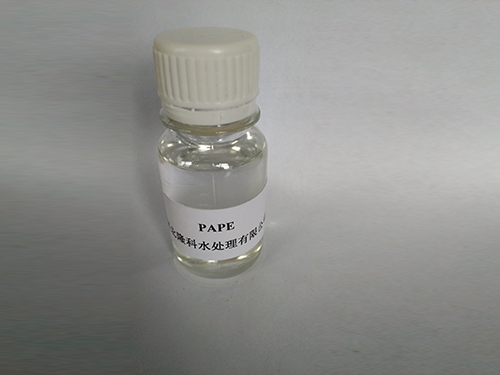
Polyhydric Alcohol Phosphate Ester (PAPE) Corrosion & Scale
Field Notes: Polyhydric Alcohol Phosphate Ester(PAPE) for stubborn Ba/Sr scale
I’ve been around enough treatment plants and well pads to know: barium and strontium scale can make level-headed engineers a little twitchy. The good news—there’s a class of phosphate esters that actually holds its nerve. The product I’ve been testing, Polyhydric Alcohol Phosphate Ester(PAPE), punches above its weight on BaSO4 and SrSO4, and it still checks the usual boxes on CaCO3 and CaSO4. Bonus: it brings mild cathodic protection for steel as well, which operators quietly appreciate.
What’s trending in scale control
Across oil & gas waterfloods, geothermal loops, and mining circuits, operators are shifting from single-function phosphonates to multi-functional phosphate esters. Why? Two things: complex brines (Ba2+/Sr2+) and tighter discharge limits. Polyhydric Alcohol Phosphate Ester(PAPE) is getting traction because it balances threshold inhibition with dispersion and some corrosion mitigation—without needing exotic dosages. To be honest, demand spikes whenever new wells hit the high-barium zones.
Product specs (typical)
| Appearance | Clear to slightly hazy amber liquid |
| Active content (wt%) | ≈ 40–50% (real-world use may vary by custom grade) |
| Total phosphorus (as P, wt%) | ≈ 6.5–8.5% |
| pH (1% solution) | 2.0–3.0 |
| Density (20 °C) | 1.15–1.25 g/cm³ |
| Thermal tolerance | Up to ~180 °C in brine matrices |
| Recommended dosage | 5–50 mg/L (Ba/Sr brines may require 20–80 mg/L) |
How it’s made and vetted
Process flow (simplified): polyhydric alcohols + phosphorus donor → controlled esterification → neutralization/conditioning → filtration/polish → QC. Methods include acid value titration, total P by colorimetry (SM 4500-P), ICP-OES for metals, and stability/thermal screening. Testing standards I keep seeing in reports: NACE TM0197 for inhibitor screening, ASTM G31 immersion for steel, and ISO/IEC 17025 accredited methods for analytical work. Shelf life: ≈ 12 months sealed at 5–35 °C. Origin: No. 3, North of Haohua East Road, North Park, Neiqiu county Industrial Zone, Xingtai City, Hebei Province.
Lab snapshots and field notes
- Dynamic tube blocking (BaSO4, 25 °C, 25 mg/L dose): 98% inhibition; SrSO4: 96% (internal lab, NACE-style protocol).
- CaCO3 jar test (hardness ≈ 600 mg/L as CaCO3): ≥ 95% inhibition at 10–15 mg/L.
- ASTM G31, carbon steel in brine, 60 °C: up to 35–55% corrosion rate reduction vs. blank—call it cathodic-lean protection, not a full corrosion program.
Case study, onshore waterflood: barium 8–12 mg/L, sulfate 1,100–1,400 mg/L. Switching to Polyhydric Alcohol Phosphate Ester(PAPE) at 35 mg/L cut heat-exchanger ΔP drift by ~70% over 60 days; clean-in-place frequency dropped from monthly to once per quarter. Operators said, “it finally held the line”—their words, not mine.
Where it fits
Oil & gas produced/injection water, geothermal reinjection loops, RO pretreatment (antiscalant), mining process water, and industrial cooling towers with difficult brines. In fact, many customers say it’s a “set-and-forget” backbone, then they trim with dispersants if fines get lively.
Vendor landscape (quick take)
| Vendor | Strengths | Certs/Support | Customization |
|---|---|---|---|
| LKP (Hebei) | Strong Ba/Sr data; stable lead times | ISO-like QA; test packs; tech onboarding | P content, pH, solvent system tunable |
| Generic A | Economical | Basic COA | Limited |
| Generic B | Good CaCO3 control | Regional lab partners | Some blending options |
Customization, packaging, and compliance
Custom ratios (mono/di-ester balance), targeted phosphorus content, and pH-adjusted grades are realistic. Packaging usually 25 kg drums or 1,000 L IBCs. Look for SDS alignment with GHS, and ask for test reports referencing NACE TM0197, ASTM G31, and SM 4500-P. If your lab is ISO/IEC 17025, even better—data correlation gets smoother.
Final thoughts
If Ba/Sr are chewing up your budget, Polyhydric Alcohol Phosphate Ester(PAPE) is honestly worth a trial. Start with 20–40 mg/L, validate with a dynamic scale loop, and track ΔP plus clean-in-place intervals. It seems that once it’s dialed in, the maintenance calendar actually relaxes.
References
- NACE TM0197: Methods for Laboratory Screening of Scale Inhibitors for Oil and Gas Production.
- ASTM G31-21: Standard Guide for Laboratory Immersion Corrosion Testing of Metals.
- APHA Standard Methods 4500-P: Phosphorus by Colorimetry (Standard Methods for the Examination of Water and Wastewater).
- ISO/IEC 17025: General requirements for the competence of testing and calibration laboratories.
-
Comprehensive Analysis on Why Aluminum Chlorohydrate Safe for UseNewsApr.16,2026
-
Industrial Applications and Guide to Chloride of AluminiumNewsApr.09,2026
-
Exploring Aluminium Chloride Properties Applications and Sourcing InformationNewsApr.07,2026
-
Comprehensive Guide to Chloride Aluminium Properties Applications and SourcingNewsApr.04,2026
-
Understanding Aluminium Chloride Properties Applications and Sourcing DetailsNewsMar.31,2026
-
Understanding Aluminium Chloride Properties Applications and SourcingNewsMar.28,2026